Why Domestic Violence Must Be Treated as a Brain Injury Crisis
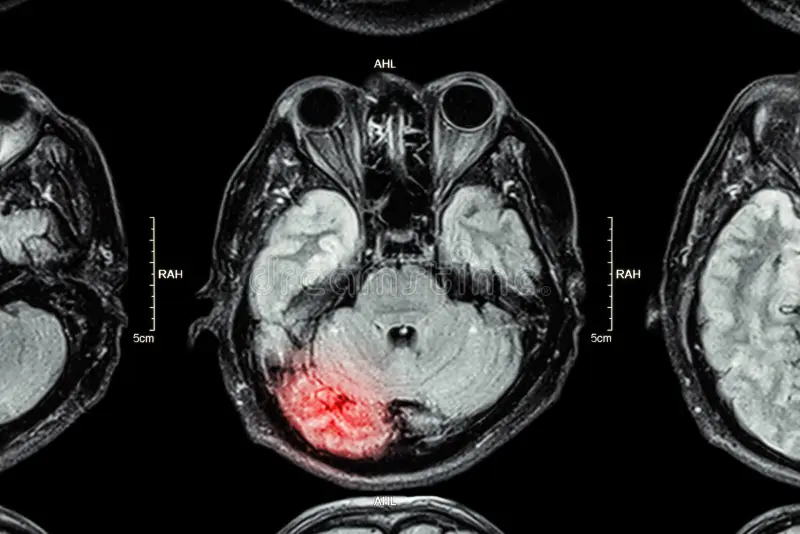
Domestic violence is often treated as a matter of bruises and broken bones. Far less attention is given to the neurological damage caused when abusers strike the head and face. Yet brain injury may be the most lasting and least recognized harm inflicted through intimate partner violence.
Both males and females can be victimized by intimate partner violence (IPV); however, approximately four in five victims of criminally recorded IPV identify as female. Females experience significantly greater physical injury and incur higher service-related costs than males. IPV perpetrators frequently target the head and face, which places victims at high risk for brain injury (BI). Estimates suggest that up to 75% of women who survive IPV sustain a BI in the context of abuse (Dams-O’Connor et al., 2023). This concentration of injury to the head and face underscores why IPV must be understood not only as a criminal justice issue but also as a neurological and public health crisis. Brain injury disrupts cognition, emotional regulation, and impulse control, creating long-term vulnerabilities that extend far beyond the immediate incident.
The Centers for Disease Control and Prevention (CDC) highlights that a large proportion of adults and juveniles in prisons and detention centers report a history of traumatic brain injury (TBI). These injuries are associated with mental health challenges, substance use, impulsivity, and behavioral problems that affect daily functioning and contribute to disciplinary issues within correctional facilities. The CDC further emphasizes that routine TBI screening and improved identification and management in correctional settings can facilitate access to care, guide safety and de-escalation strategies, and improve health outcomes during incarceration and following release (CDC, n.d.). These findings demonstrate how unrecognized TBIs—many of which originate in violent contexts such as IPV—can shape later involvement with the justice system. Without screening and intervention, brain injury becomes a hidden factor driving behavioral outcomes, reinforcing cycles of victimization, criminalization, and untreated disability.
Legislative and Policy Developments
Recognizing the growing evidence linking violence and brain injury, policymakers have begun to respond at both local and federal levels. In November 2025, the New York City Council passed legislation amending the administrative code of the City of New York to require a training program for first responders and a public awareness campaign addressing the health effects of domestic violence–related traumatic brain injuries (New York City Council, 2025). This local action reflects an emerging policy shift toward early identification and prevention rather than solely post-injury response.
At the federal level, Congress introduced the Protecting Survivors from Traumatic Brain Injury Act of 2023 (S. 3144), which sought to authorize the Secretary of Health and Human Services to collect data on the prevalence of brain injuries resulting from domestic and sexual violence. Although the bill was unsuccessful, it reflects increasing recognition of IPV-related TBI as a public health and policy issue (BillTrack50, 2023). Even in failure, this legislation signals that brain injury is no longer viewed as incidental to abuse but as a measurable harm requiring national surveillance.
Federal attention to TBI is not new. The Traumatic Brain Injury Act of 1996 established a national framework for prevention, research, and service delivery through state grants administered by the Health Resources and Services Administration (HRSA). In 1998, Alabama supplemented this federal effort by creating the Head Injury and Spinal Cord Injury Registry Act to track hospital discharges and connect survivors with services (Alabama Department of Rehabilitation Services, n.d.). These early initiatives laid the foundation for treating TBI as a chronic condition requiring coordinated care rather than a one-time injury event.
The TBI Amendments of 2000 expanded the original Act by strengthening CDC surveillance and education efforts, authorizing National Institutes of Health (NIH) research on cognitive and neurobehavioral outcomes, and increasing HRSA’s role in developing state service capacity and consumer-directed supports. These amendments also improved data collection through registries, broadened allowable services and funding flexibility, and created protection and advocacy programs to ensure coordinated, rights-based services nationwide (Brain Injury Association of America, 2022). This expansion reflects growing awareness that the consequences of TBI extend into legal rights, service access, and long-term independence.
The 2008 reauthorization extended federal funding and strengthened CDC and NIH responsibilities for surveillance and reporting across civilian, institutional, and military populations. It also refined the HRSA state grant program to emphasize rehabilitation and expanded eligibility to American Indian consortia while adding training and technical assistance provisions (Brain Injury Association of America, 2022). By broadening populations and services, Congress acknowledged that brain injury cuts across social systems, including healthcare, corrections, and tribal governance.
The TBI Reauthorization Act of 2014 further strengthened research coordination by directing the CDC and NIH to study pediatric brain injury management and identify future research needs. It authorized funding through 2019 and shifted administrative responsibility for state and protection and advocacy grants to the Secretary of Health and Human Services to improve federal coordination (Brain Injury Association of America, 2022). This shift illustrates an effort to centralize oversight and improve consistency in how states address brain injury.
The 2018 reauthorization expanded CDC authority to collect national concussion data and formally assigned the Administration for Community Living within HHS to administer the TBI State and Protection and Advocacy grant programs. Funding was reauthorized through 2024, and HHS was required to report to Congress on program outcomes and consumer satisfaction to improve accountability and effectiveness (Brain Injury Association of America, 2022). Together, these legislative changes demonstrate a trajectory toward evidence-based governance, emphasizing data, outcomes, and survivor-centered systems.
Screening Tools and Identification
Legislation alone is insufficient without practical tools for identifying brain injury. The Brain Injury Screening Questionnaire–IPV (BISQ-IPV) module is a seven-item self-report add-on designed to identify lifetime head, face, or neck injuries sustained in the context of IPV, including experiences such as being shoved, hit, strangled, or choked. The tool uses contextual prompts specific to IPV experiences to improve reporting of IPV-related brain injuries, which are often missed by standard TBI screening questions. Preliminary research suggests that incorporating IPV-specific items increases disclosure of both IPV-related and other violent brain injuries (Dams-O’Connor et al., 2023). This innovation addresses a critical gap: traditional medical screening fails to capture injuries embedded in abusive relationships.
Additional evidence-based screening tools include the Ohio State University Traumatic Brain Injury Identification Method (OSU TBI-ID), the Traumatic Brain Injury Questionnaire, and the Brain Check Survey. These tools are brief, can be integrated into intake procedures, and help detect both TBI history and related symptoms. They also provide guidance on best practices for administration in correctional and justice settings to encourage honest reporting and appropriate follow-up (VA MIRECC, n.d.). Their adaptability across institutional settings makes them especially valuable for populations with high exposure to violence and limited access to neurological care.
The HELPS TBI screening tool, developed by Picard, Scarisbrick, and Paluck, is designed to identify TBIs based on reported head injuries and is particularly useful in emergency department settings. Together, these instruments show that practical, low-burden screening is already available; the remaining barrier is institutional adoption.
State-Level Implementation
Several states have operationalized these tools and policies through targeted initiatives. Ohio utilizes the OSU TBI-ID across service systems, including correctional facilities. Arizona has implemented prehospital TBI treatment guidelines associated with improved survival rates (EPIC Arizona, n.d.). Missouri developed a five-year state plan (2024–2029) emphasizing surveillance, data collection, and service improvement (Missouri Department of Health and Senior Services, 2024). New York operates a Medicaid HCBS/TBI waiver through Regional Resource Development Centers. Indiana maintains a trauma registry for hospital admissions, and North Carolina implemented a state action plan utilizing TBI tools for safety and referral pathways. Alabama, California, Colorado, Georgia, New Jersey, Ohio, and Washington have also developed extensive TBI initiatives. These examples demonstrate that coordinated, state-level implementation is feasible and scalable when supported by federal frameworks and clinical tools.
Policy Implications for Mandatory Screening
Given the availability of validated screening instruments, mandatory use in hospitals and clinics is crucial when a victim of domestic violence reports a head injury. Law enforcement officers should request emergency medical technicians (EMTs) whenever a blow to the head is reported. EMTs should conduct initial evaluations using structured screening questions such as those in the HELPS protocol. When further evaluation is indicated, medical professionals should determine whether the individual has sustained a concussion or a more serious traumatic brain injury as a result of domestic abuse. This clinical pathway ensures that neurological harm is treated as an urgent medical issue rather than an incidental detail of assault.
A confirmed diagnosis of TBI should elevate charges from domestic assault to aggravated assault, similar to existing strangulation laws in Tennessee. This policy shift would enhance victim safety and recognize the severity of brain injury as a potentially life-altering harm rather than a minor or temporary injury.By linking medical diagnosis to legal classification, the justice system can better reflect the true magnitude of harm caused by IPV-related brain injury and deter repeated head trauma.
Reference List
Alabama Department of Rehabilitation Services. (n.d.). Traumatic brain injury services. https://rehab.alabama.gov/services/vr/tbi
Brain Injury Association of America. (n.d.). Traumatic Brain Injury Act. https://biausa.org/public-affairs/public-policy/traumatic-brain-injury-act
Brain Injury Association of America. (2022). History of the Traumatic Brain Injury Act. https://static1.squarespace.com/static/5eb2bae2bb8af12ca7ab9f12/t/627b1c9818bd873a81a9c617/1725378662793/update_history+of+the+Traumatic+Brain+Injury_2022.pdf
Centers for Disease Control and Prevention. (n.d.). Traumatic brain injury in correctional facilities. https://www.cdc.gov/traumatic-brain-injury/health-equity/correctional-facilities.html
Dams-O’Connor, K., Bulas, A., Haag, H. L., Spielman, L. A., Fernandez, A., Frederick-Hawley, L., Hoffman, J. M., & Goldin Frazier, Y. (2023). Screening for brain injury sustained in the context of intimate partner violence (IPV): Measure development and preliminary utility of the Brain Injury Screening Questionnaire IPV module. Journal of Neurotrauma, 40(19–20), 2087–2099. https://doi.org/10.1089/neu.2022.0357
Indiana Department of Health. (n.d.). Trauma registry. https://www.in.gov/health/trauma-system/trauma-registry/
Missouri Department of Health and Senior Services. (2024). Missouri traumatic brain injury state plan 2024–2029. https://health.mo.gov/seniors/tbi/pdf/mo-tbi-state-plan-2024-2029.pdf
New York City Council. (2025). Legislation requiring training and public awareness of domestic violence–related traumatic brain injuries. https://legistar.council.nyc.gov/LegislationDetail.aspx?ID=6509351&GUID=0FD40397-B3A9-4445-8815-65B735396111
North Carolina Department of Health and Human Services. (2023). North Carolina state action plan for people with traumatic brain injury. https://www.ncdhhs.gov/tbistateactionplan2023final2/open
U.S. National Library of Medicine. (n.d.). Brain Injury Screening Questionnaire (BISQ) IPV module. https://pmc.ncbi.nlm.nih.gov/articles/PMC10623077/VA Mental Illness Research, Education, and Clinical Centers. (n.d.). Screening and assessment for TBI in justice settings. https://www.mirecc.va.gov/visn19/tbi_toolkit/justice/screening_assessment.asp#screenTBI